
Protecting the Rights of Green Mountain State Veterans: Vermont VA Disability Lawyers
Veterans make up 6.5% of the population of Vermont and many have returned home with service-connected injuries, illnesses, and medical conditions that impact their daily lives. Vermont veterans who receive disability benefits from the U.S. Department of Veterans Affairs (VA) may need legal assistance and VA Benefits Attorneys is here to help.
Veterans in need of a Vermont VA disability attorney can contact VA Benefits Attorneys today for a FREE legal consultation!
What You Need to Know About Vermont VA Disability Benefits
We know that many Vermont veterans have questions about their disability benefits. Many want to know if they are eligible for disability compensation. Others want to know how to appeal a denied disability claim. And still more have questions about how to file a disability claim with the Department of Veterans Affairs. VA Benefits Attorneys is your nationwide legal resource for veteran disability benefits and we are here to answer your questions.
Am I Eligible VA Disability Benefits in Vermont?
Are you a veteran who lives in Vermont? Do you struggle with an injury, illness, or medical condition related to your military service? You may be asking — am I eligible for VA disability?
Veterans who call Vermont home must meet TWO basic criteria to be eligible for disability benefits — they must have an injury, illness, or medical condition that affects the body or mind AND they must have served in the U.S. Military on active duty, active duty for training, or inactive duty for training.
Vermont veterans who hope to receive VA disability benefits and meet the initial criteria must ALSO have a service-connected disability that falls into one of the categories set by the Department of Veterans Affairs and is listed below:
- In-Service Disability Claim — The veteran became sick or was hurt while in the military and their current disability can be directly linked to their service in the military.
- Pre-Service Disability Claim — The veteran had an injury or medical condition that was diagnosed prior to their military service that was made worse by their service in the military.
- Post-Service Disability Claim — The veteran has an injury, illness, or medical condition that was diagnosed after their separation from the military that can be linked to their service in the military.
Are There Additional VA Benefits for Vermont Veterans?
Did you know that the U.S. Department of Veterans Affairs provides veterans with more benefits than just disability? And many veterans do not take advantage of these benefits. VA Home Loans provide low-interest loans for qualified veterans who hope to purchase a home and start a family and just 6% of veterans have used a VA Home Loan. The Post-9/11 GI Bill provides tuition assistance for Vermont veterans who hope to continue their education and is used by just 54% of veterans. Additional veterans benefits include medical care at VA facilities and affordable insurance options.
Do My Injuries Make Me Eligible for VA Disability Benefits?
Do you have a service-connected injury, illness, or medical condition? Do you have questions about your eligibility for disability benefits? VA Benefits Attorneys is here to help answer questions like — does my injury make me eligible for VA disability benefits?
Vermont veterans have served across the globe in many armed conflicts and there is a long list of injuries, illnesses, and medical conditions that can be connected to that military service. Not all injuries are visible and not all injuries make you eligible for disability benefits. Here is a short list of a few common service-connected injuries, illnesses, and medical conditions that you can claim for disability.
- Posttraumatic Stress Disorder – PTSD
- Depression and Anxiety
- Traumatic Brain Injury – TBI
- Chronic Migraines
- Tinnitus
- Hearing Loss
- Chronic Back, Neck, and Knee Pain
- Select Types of Cancer
- Select Types of Lung Disease
- MORE…
How Do I Apply for VA Disability in Vermont?
Do you have questions about the VA disability application process? You have come to the right place and VA Benefits Attorneys is happy to help.
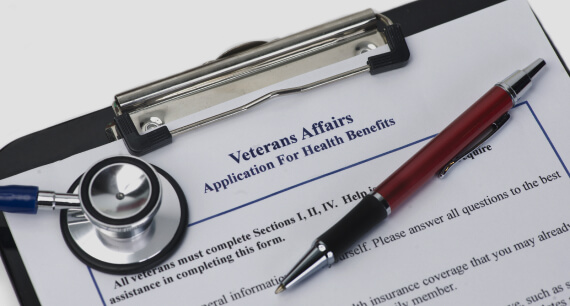
The application process is pretty straightforward. Veterans can apply online with the application form at www.va.gov/disability. Veterans can complete the application online and submit it with the proper medical documents to receive a disability rating. Vermont veterans who prefer to apply in person can download and print the application form, complete the form, and submit it with the proper medical documents at the VA Regional Office in White River Junction.

How Do I Appeal a Denied VA Disability Claim?
Each year — an estimated 30% of veteran disability claims are denied by the U.S. Department of Veterans Affairs. Applications can be denied for a variety of reasons that include incomplete forms or lack of medical documentation.
We understand that a denied VA disability claim can be disheartening and frustrating — but a denied claim does not mean you will never receive disability compensation. Vermont veterans can appeal a denied disability claim with the help of VA Benefits Attorneys and three methods of appeal — file a Supplemental Claim, file a Higher-Level Review, or submit a Board Appeal.
Contact VA Benefits Attorneys today for help with your denied disability claim!

Discover State Veteran Benefits and Initiatives in Vermont
Outside the scope of federal veterans benefits, the State of Vermont steps up for its military veterans and their families with state-sponsored programs that are administered by the Vermont Office of Veterans Affairs. These targeted benefits are built to reduce living costs, open up the state’s natural beauty, and offer critical property tax relief:
Vermont Veterans Assistance Fund:
If sudden financial emergencies strike — such as unexpected housing costs, utility shutoffs, or urgent medical bills — the state provides specialized grants to help veterans regain their financial footing.
Free Hunting and Fishing Licenses:
Vermonters with a service-connected VA disability rating of at least 60% or higher are granted free permanent sport fishing and hunting licenses.
Disabled Veteran Property Tax Exemption:
The state automatically reduces the appraised value of a primary home by $10,000 for veterans with a disability rating of 50% or higher. In addition — local town votes can approve an increase of this exemption up to $40,000.
Green Mountain Passport:
Disabled veterans with a 100% rating can pick up this special pass from their local town office and receive free day-use access to state historical sites and parks.
By putting these state-level veterans initiatives and benefits programs in place, Vermont honors the sacrifices of its local veterans with tangible financial relief.
Team Up with Vermont Veteran Service Officers (VSOs)
Cutting through the red tape for both federal and state benefits is much easier when you have a certified advocate in your corner. Across the Green Mountain State, Veteran Service Officers (VSOs) provide expert claims assistance free of charge.
An accredited VSO helps you by:
Regional VA Medical Centers and Clinics in Vermont
Creating a continuous and well-documented clinical history is important for proving your service connection and appealing low disability ratings or denied claims. Veterans across the state can access specialized, high-quality care through the White River Junction VA Medical Center and a network of community clinics:
Brattleboro VA Clinic
– Brattleboro, VT
Newport VA Clinic
– Newport, VT
Bennington VA Clinic
– Bennington, VT
Rutland VA Clinic
– Rutland, VT
Burlington VA Clinic (Lakeside)
– Burlington, VT
White River Junction VA Medical Center
– White River Junction, VT
Consistently attending medical evaluations at these federal facilities generates the medical evidence that veterans may need to appeal a denied claim or have a low rating increased with future claims.
Common Service-Connected Medical Conditions Claimed in Vermont
Stepping away from the military often means dealing with the hidden medical conditions and physical injuries sustained during military service. Green Mountain State veterans routinely file federal disability claims for a variety of severe, service-connected health challenges:
Psychological and Mental Health Disorders:
The intensity of combat and demanding military operations frequently result in severe anxiety disorders, major depression, and posttraumatic stress disorder (PTSD).
Toxic Exposures and Airborne Hazards:
Service members deployed near industrial solvents, dangerous particulate matter, and open burn pits can develop rare cancers and chronic respiratory diseases, which are now expedited under the PACT Act.
Joint Damage and Musculoskeletal Injuries:
The physical routine of infantry duty, heavy military gear, and repetitive physical training often leads to arthritis in major joints, chronic lower back pain, and spinal disc compression.
Tinnitus and Hearing Damage:
Prolonged exposure to jet engines, explosive munitions, firing ranges, and heavy machinery regularly causes persistent tinnitus and permanent sensorineural hearing loss.
Traumatic Brain Injury (TBI):
Physical head trauma, concussive force, and blast waves frequently trigger long-term migraines, cognitive challenges, and memory loss.
These medical conditions represent a majority of the disability claims submitted by local Vermont veterans, and securing clinical documentation is a necessity for winning fair compensation.
Three Legal Ways to Challenge a Denied VA Claim in Vermont
A claim denial or a frustrating low disability rating is merely an administrative hurdle, not the end of your fight. The VA system provides veterans with three distinct methods to appeal a denied claim:

Higher-Level Review
A senior adjudicator takes a fresh look at your existing case file to identify overlooked evidence or potential errors, without allowing any new documentation.

Supplemental Claim
This avenue lets you reopen your claim by submitting new evidence — such as an independent medical nexus letter — to resolve gaps in your claim.

Board of Veterans’ Appeals
You can choose to bypass local regional processing for your claim and present your legal arguments directly to a Veterans Law Judge in Washington, D.C.
Teaming up with an experienced and accredited VA disability lawyer helps ensure you choose and execute the most effective legal strategy to overturn a denied claim.
State Tax Relief and Financial Benefits for Vermont Veterans
To lower the everyday cost of living for military veterans and their families, Vermont has enacted several valuable fiscal policies and tax allowances specific to veterans:
Tax-Free VA Disability Pay:
Federal disability compensation is completely protected from both federal and state income taxes, guaranteeing you retain all of your monthly disability compensation.
Veteran Driver’s License Designation:
Honorably discharged veterans can get an official veteran designation on their Vermont state ID or driver’s license, simplifying the process of receiving benefits.
Disabled Veteran Property Tax Exemption:
Veterans with a disability rating of 50% or higher receive an automatic $10,000 reduction in the appraised value of their home, with many municipalities voting to expand this relief up to $40,000.
Taking advantage of these state-level tax incentives and financial exemptions for veterans provides economic stability to qualifying homes across Vermont.
Veteran Educational Benefits and Career Advancement in Vermont
Making the change to the civilian workforce or pursuing higher education can be a challenge — but it is strongly supported by state-sponsored academic incentives and hiring preferences:
High School Diplomas for Wartime Veterans
Vermont proudly issues high school diplomas to veterans of the Vietnam War, Korean War, and WWII who left school early to serve in the military.
State Employment Preference
Honorably discharged veterans are granted preference points on state civil service exams, while disabled veterans receive a larger point bonus to boost their hiring prospects.
Vermont National Guard Tuition Assistance
Active members of the Vermont National Guard are eligible for substantial tuition funding for degree programs at the University of Vermont and Vermont State Colleges.
These targeted educational and workforce benefits give departing military veterans a reliable foundation for building successful post-military careers.
Skilled Nursing and Residential Care at the Vermont Veterans’ Home
When aging, disabled, or injured service members need specialized memory care, physical rehabilitation, or 24/7 medical care, the state provides a dedicated residential setting for state veterans:
– Bennington, VT
Final Honors at the Vermont State Veterans Cemetery
To ensure that departed service members are laid to rest with the proper dignity, military protocol, honor, and official government headstones, the state maintains a dedicated veterans cemetery:
Vermont Veterans Memorial Cemetery
– Randolph Center, VT
Eligible veterans, and eligible dependents and spouses, receive full burial honors and grave space at this serene location at no cost to the family and with long-term care of the site.
Local Vermont Grassroots Coalitions and Veteran Networks
When you look beyond official government agencies that protect veterans, Vermont boasts an active network of non-profit service groups and organizations working to help veterans across the state:
Real Life Example: Overturning a VA Claim Denial in Vermont
Case File – Burlington, VT
A Marine Corps veteran living in the Burlington area was initially denied service connection for severe, chronic migraines that he filed secondary to his service-connected PTSD and tinnitus. The regional VA rater argued there was no documented medical etiology connecting the neurological condition to his existing service-linked impairments. The veteran hired an experienced VA disability attorney who collected comprehensive service treatment records, pulled private neurology charts, and arranged for an independent nexus evaluation from a board-certified specialist. This clinical rationale proved definitively that the constant auditory ringing and severe anxiety from his PTSD directly triggered the debilitating migraines. Armed with this robust evidence, the attorney won a Supplemental Claim that awarded a 30% rating for the migraines, boosting the veteran’s combined rating and securing full retroactive back pay.
Building objective, undeniable medical evidence is absolutely crucial when fighting an incorrect VA decision. Whether your home is in Burlington, Rutland, Bennington, Montpelier, or St. Albans, partnering with skilled legal advocates ensures your claim is backed by the procedural and clinical proof required to win.
The case study details presented above serve as a representative example based on typical VA claim outcomes and are provided for illustrative purposes only. Past results do not guarantee future case outcomes.
FAQs from Green Mountain State Veterans
Strategic Next Steps for Your VA Claim
Overcoming denied disability claims and navigating the federal VA claims process doesn’t have to be a solo mission:
Organize and Secure: Track down your separation documents (DD-214), private physician notes, personal symptom diaries, and military medical archives.
Consult Local Resources: Meet with your regional VSO to verify your eligibility for the Green Mountain Passport, recreational licenses, and property tax deductions.
Partner with a Legal Advocate: Hire a VA-accredited attorney — like VA Benefits Attorneys — to review your claim, establish vital medical nexus evidence, and handle all appeals for low ratings or denied claims.
Contact VA Benefits Attorneys today to book your free, confidential case evaluation!